A Local to Global Perspective on the Climate Crisis: Results of Our Roundtable Workshop

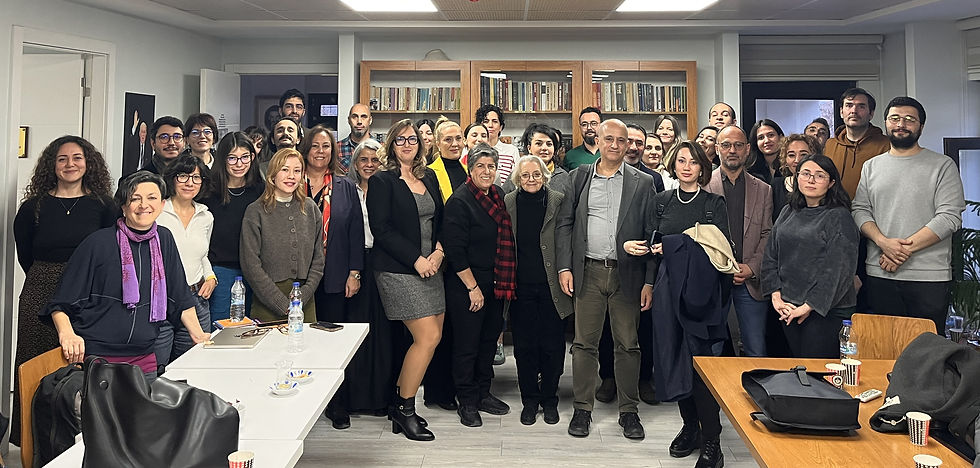
As the Global Climate Academy Association, we held a comprehensive roundtable meeting on December 25, 2025, with the aim of not only identifying problems but also producing feasible and equitable solutions to the climate crisis. This meeting was organized in collaboration with the HABITAT Association and the Social Climate Association.
In five different working groups, ranging from public and local governments to women's studies, entrepreneurship, youth, and individual awareness, we discussed Türkiye's roadmap on the path to COP31 with our participants. Here are the striking topics and solution proposals that emerged from this productive workshop:
1. Will and Implementation Gap: Targets Exist, Action Lack
The clearest finding of our Public and Local Administrations group was that the problem is more of a policy implementation gap than a lack of legislation. Since climate action requires long-term budgets, local administrations sometimes focus on short-term solutions, postponing the real issue.
Our Solution Proposal: It is essential that critical processes, such as the mucilage action plan, are opened to citizen scrutiny through transparent monitoring charts. Data should be shared with the public to make deficiencies in will visible and increase the resolve to act.
2. Climate Justice Depends on Gender Equality
The Women's Working Group drew attention to the multiplier effect of the climate crisis on socio-economic problems. The increased burden of care work in post-disaster processes and the risks of women being exposed to more violence in climate-related migrations were highlighted.
Our Proposed Solution: Women need to be in decision-making positions in all processes, from local to global, not just consulted. Furthermore, it is essential that the Belem Gender Equality Action Plan finds legal representation at the national level.
3. Young People Want Authority, Not Showcase
The strongest voice from the Children and Youth Working Group was the discomfort felt by young people about being used only as a visible element in processes. Low participation in decision-making processes and a lack of environmental awareness in education are among the fundamental problems.
Our Proposed Solution: Establishment of youth councils with real authority within municipalities. Also, for COP31, young people should not only be participants; We propose the creation of a COP31 YouthLabHub where policymakers are involved.
4. Sectoral Responsibility, Not Individual Guilt
Our Individuals and Entrepreneurship tables criticized the creation of psychological pressure by placing the burden of the climate crisis solely on individual consumers. It was stated that in a system where corporate pollution is far greater than individual consumption, the focus should shift to large producers.
Our Proposed Solution: A company claiming to be green should not be allowed to harm nature in another sector; producer transparency should be ensured. Increased taxes levied on companies that do not comply with climate policies should be channelled into environmentally friendly investments as green grants.
Conclusion: COP31 and Structural Transformation
Our workshop confirmed that Türkiye's climate policies are not a technical issue; they require a deep socio-economic transformation. Special sections should be opened for the Mediterranean and Black Sea basins in the upcoming COP31 process, and local organizations should be directly represented in this process.
As the Global Climate Academy Association, we view the climate crisis as a structural crisis that needs to be solved; We invite all stakeholders to contribute to building a fair, transparent, and participatory future.
For more detailed information about this report and workshop outcomes, or to contribute to our work, please contact us.