


The Price of Melting Glaciers: Climate Injustice in Nepal and the Himalayas

Rapidly melting glaciers in the Himalayas are threatening not only natural ecosystems but also the lives and livelihoods of millions of people. The recent disaster in Nepal once again demonstrates how communities that have contributed the least to the climate crisis are often forced to pay the heaviest price.
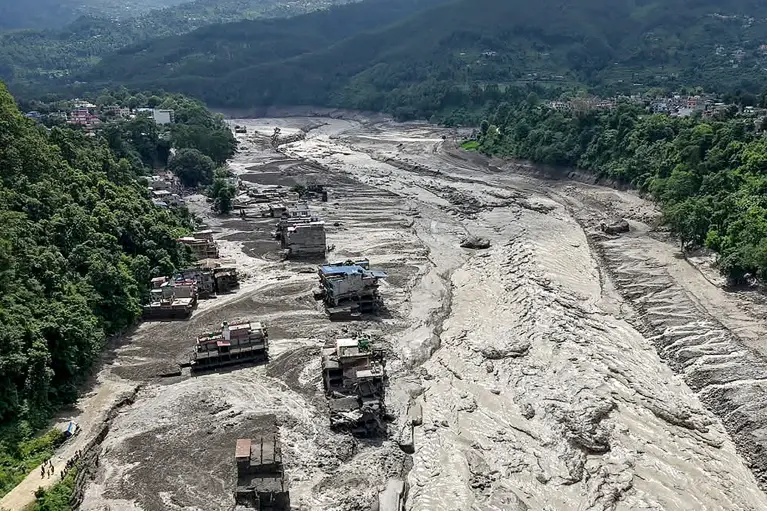
We have all seen those disturbing images in the news of enormous masses of ice breaking away from glaciers in the polar regions and plunging into the sea. Until now, however, such scenes have generally occurred in remote oceans, far from human settlements. In the latest major disaster in Nepal, a similar glacier collapse occurred not at sea, but directly into a narrow riverbed. In Langtang National Park, an enormous mass of rock and ice broke away from the mountain and plunged approximately 1,200 metres towards the valley floor.
Driven by the speed and force of the collapse, the melting ice transformed into a massive flow of mud, rocks and debris, reaching speeds of up to 150 kilometres per hour. The result was nothing short of a tragedy. The collapse left more than 1,000 people dead or missing, along with enormous material damage that has yet to be fully assessed.
In fact, this disaster did not come without warning. It had been building for some time. Similar events, albeit on a smaller scale, have already been occurring across the Himalayas in recent years. The region had previously been shaken by a series of devastating landslides and floods. Yet the scale of the latest collapse has been described by scientists as one of the largest landslides recorded anywhere in the world over the past decade or two.
These magnificent, snow-covered mountains are melting before our eyes. According to United Nations data, the glaciers in Nepal’s snow-covered mountains have lost one-third of their mass over the past 30 years. Moreover, the rate of melting is accelerating: Nepal’s glaciers melted 65% faster over the past decade than they did during the previous decade.
The greatest challenge is unpredictability. As a result of global warming, the frozen ground that helps hold mountain slopes together is thawing, making these slopes increasingly unstable. Similar natural disasters caused by glacier melt are occurring in other mountains we may never have heard of or even know by name. Yet because they do not result in significant loss of life or property, they rarely make the news. The reality, however, is that wherever glaciers are melting, the potential for destructive floods and related disasters is increasing day by day.
There is little doubt that climate-related disasters will be high on the agenda at COP31, the 31st Conference of the Parties, to be held in Antalya this year.
The most painful aspect of this tragedy is climate injustice. Nepal is responsible for less than 0.1% of global greenhouse gas emissions that drive global warming. From the perspective of climate experts, none of the people who lost their lives or livelihoods in this disaster bears direct responsibility for global warming. They are not among the major polluters who are at the root of the problem, yet they have paid the price of this disaster with their lives.

